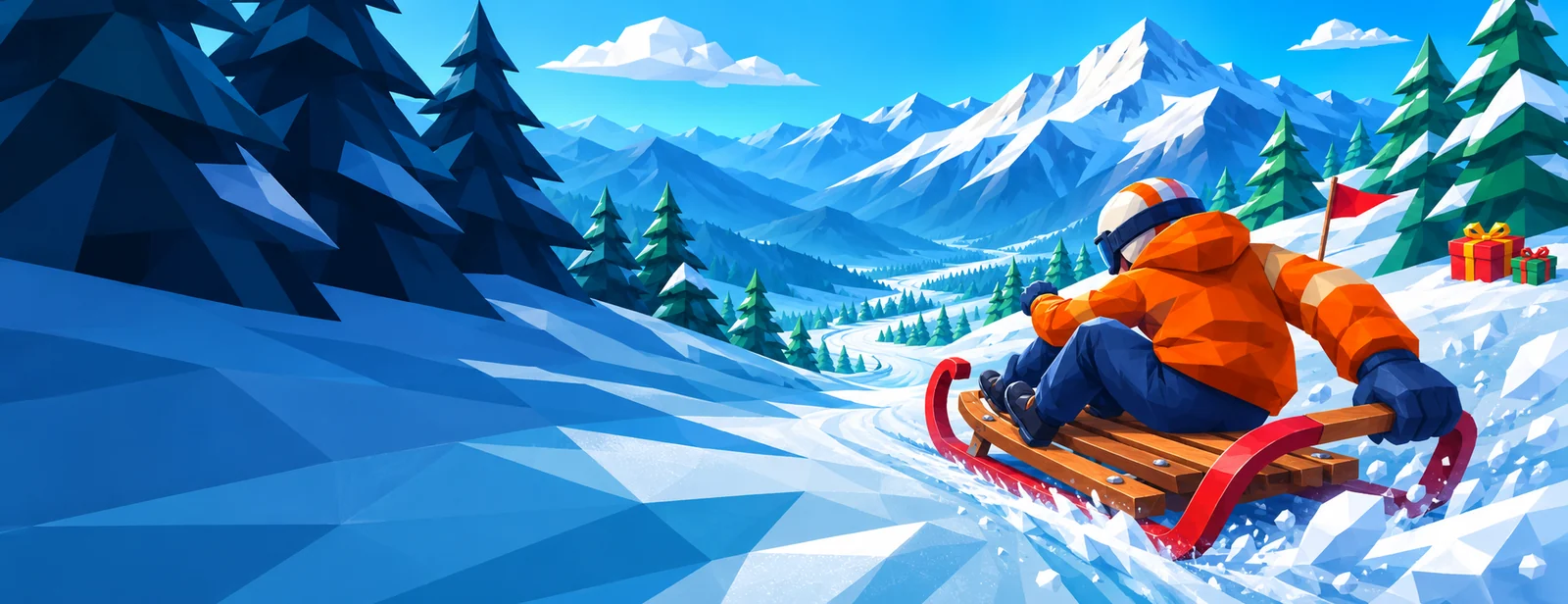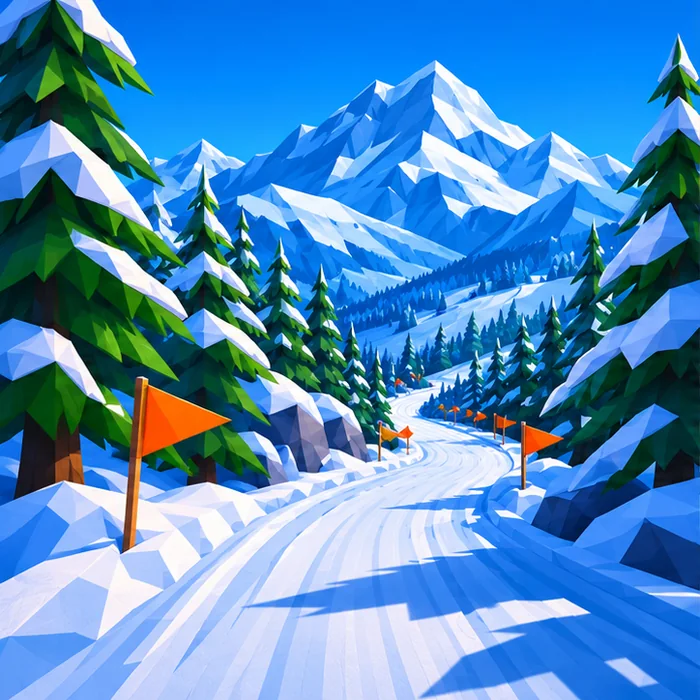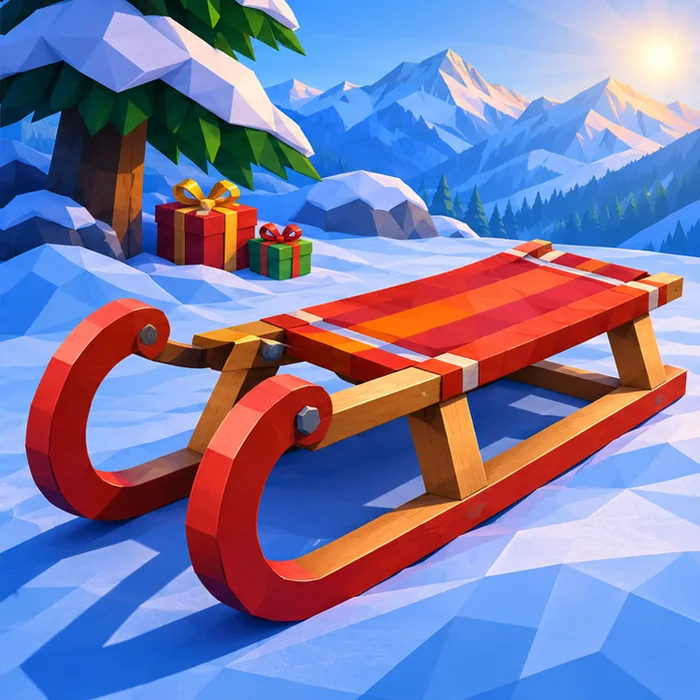
The three Sled Rider controls
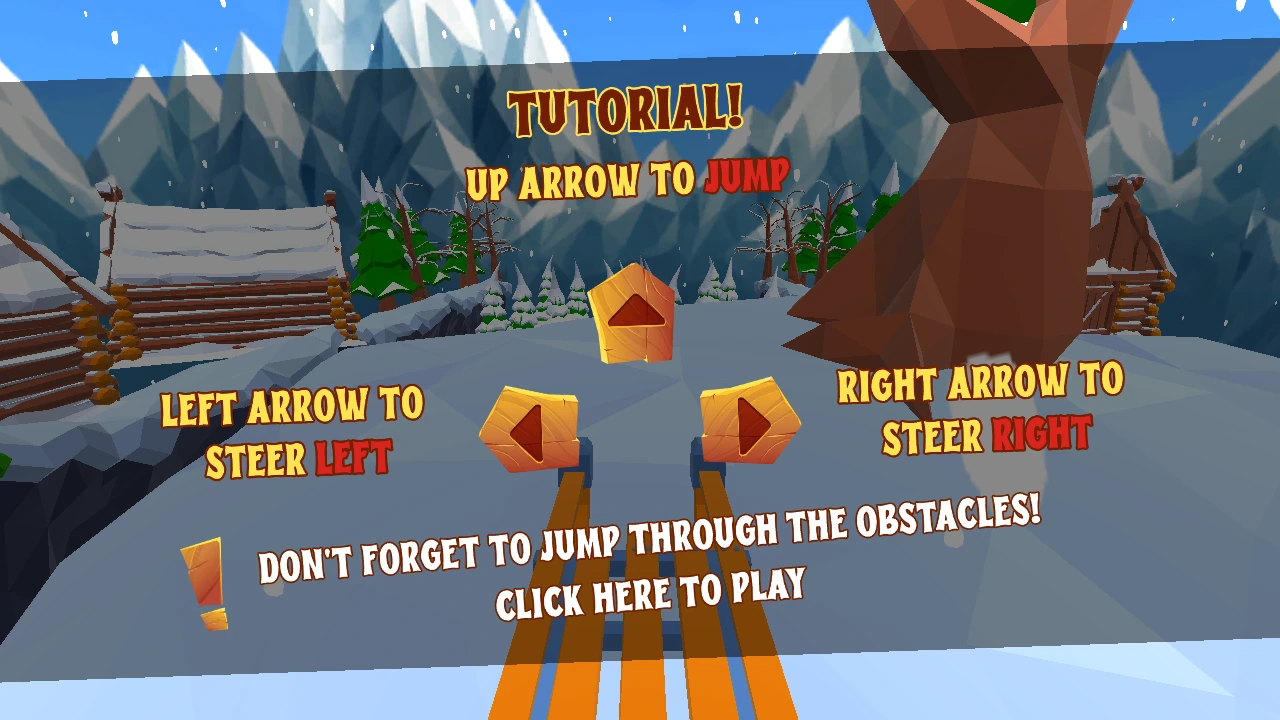
Press Left Arrow to steer left, Right Arrow to steer right, and Up Arrow to jump. The sled starts moving downhill on its own. Rest a finger on each of those three keys before you start a run. That way you can steer around the first tree or jump a gap without having to glance down at your keyboard.
Open the player and wait for the sled on the snowy ledge. Click the start prompt. On a first visit a tutorial appears over the course with three wooden arrow signs. Click the play instruction at the bottom of that panel to dismiss it and begin the descent. If an arrow moves the web page, click inside the playing area again to give it keyboard focus. Test a single sideways press in a clear patch of snow and release it as soon as the sled responds.
Get a feel for the steering
Find a stretch where the snow is open on both sides. Choose a point on the ground a little to the left of your current line and give Left Arrow a short press. Lift your finger and watch where you end up in relation to that point. Do the same to the right when there's space. The purpose of this first run is to learn how much finger movement it takes to move the width of a small obstacle.
Now pick a tree that's actually in your way. Decide which side you want, press toward it, and release once you can see clear snow in front of you. Wait until you have passed the tree before considering a turn back. If you find yourself alternating left and right several times on the approach, aim for a wider margin on your next attempt. A little extra clearance saves you from having to make a tiny last-second correction.
Try this at the entrance between the cabins. The dark rock walls frame the first downhill stretch and the trees are still ahead of you. Aim the tips of the runners toward the snow just inside one wall, then release the key while there is still white ground between the sled and the rock. If the wall fills your view and the trees disappear off to one side, you've turned farther than you need. On your next start, release the same key sooner and use the opening between the first pines as your target.
Time a jump from the approach
Try Up Arrow on clear snow once. Watch where the sled takes off and where it touches down, with your steering hand still. For your first real jump, choose a low obstacle with an unobstructed patch beyond it. Line up on the ground, let the obstacle come toward you, and press jump once. Check the far side as you come down. Seeing where you land gives you a reference for the next attempt.
If you hit the face of the obstacle before the sled gets above it, start the jump a little earlier next time. If you take off cleanly but come down against the obstacle, try leaving the ground a little later on a similar approach. A gap has the same two timing problems, with less room for error. Give yourself a straight approach to the far bank. Spending the last part of the run-up trying to get sideways makes it harder to judge when to press Up.
Put steering and jumping together
A tree followed by a gap is a good test of two different inputs. Make the sideways move first and aim toward snow on the far side of the gap. Release the steering key when you're lined up. You can then use Up Arrow with your attention on the lip of the gap. Trying to decide the direction and the jump at the very last moment gives you two opportunities to make a mistake at once.
Reverse the exercise when you see a low obstacle followed by a tree. Look for a place to land on one side of the trunk, steer toward that spot before taking off, and jump when the obstacle is close. Sometimes a route around both objects stays open all the way through. Take it. You can save a surprisingly difficult sequence of inputs just by choosing the side that gives you a clear exit.
Collect gifts for your next sled
Ride through wrapped gifts on the course to collect them. The boxes are useful after the run, when you can spend them on sleds. On a collection run, first try taking only boxes you can reach with one steering press. Start the move while there is still room, ride straight through the box, then look for the next hazard. Leave a box behind if collecting it would put you on a collision course.
Before the next run, open the sled selection and pick a model you want. Check the gift requirement shown there against your current balance. Keeping one target in mind makes the next few pickups mean something, especially on a run that ends well short of your best distance. If trying for gifts keeps ending your runs early, count how many boxes you bring back over three attempts. Repeat with a more selective route and compare your totals.
Work out why a run ended
Think of the last key you pressed before the crash. If you held Left to clear a rock and ran into a tree on that same side, try releasing the key as soon as the rock is clear. If you pressed Right and struck the obstacle you were turning away from, the decision may have come too late. Look one obstacle farther ahead on the next run so your hand has more time to carry out the move.
A jump can feel wrong for an entirely different reason. If you clear a rock and land in front of a tree, changing the timing alone might leave you with the same bad landing spot. Start the next similar jump from farther to one side. If you crash while watching the score, leave that number for the end of the run. Try changing just one thing at a time so you can tell which adjustment helped.
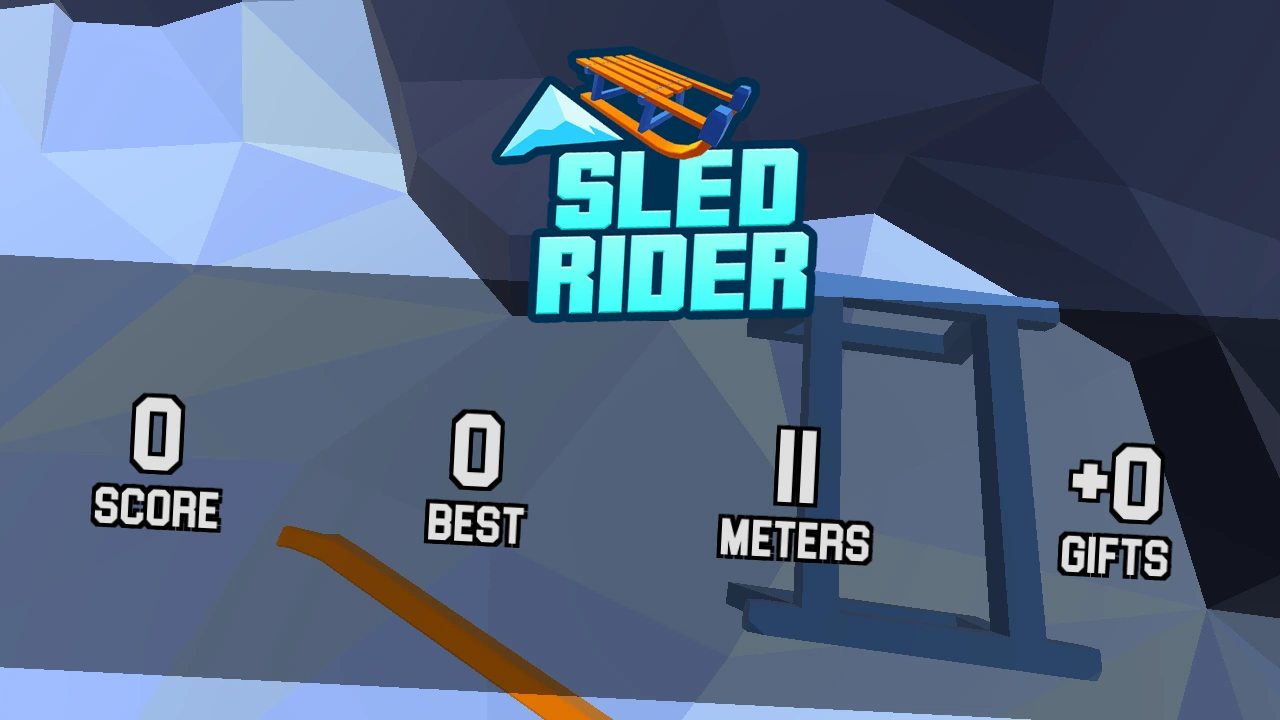
Try a short downhill practice session
Give your first attempt one job. Pass three standing obstacles without turning back toward any of them. Choose the side early, press the key, release it, and let the obstacle leave the picture. If an unavoidable gap appears, jump it, then go back to counting clean passes. Three tidy turns in a row are a useful result even if the score on that run is small.
Use the second attempt for landings. Before each jump, name a visible place you're aiming to touch down, such as the open snow to the right of a pine. Afterward, check whether you landed there and whether the next stretch was clear. That gives you two separate things to improve. You can make an accurate jump onto a poor route, just as you can pick a good route and miss the landing.
On the third attempt, play for distance and allow yourself the easy gifts. Notice which inputs now happen without a glance at the keyboard and which situations still make you hesitate. Pick the one situation that cost you the most ground and use it as the focus of the next session. If a gift between two trees spoiled the run, for example, give yourself permission to pass the next one and see how much farther the sled travels.